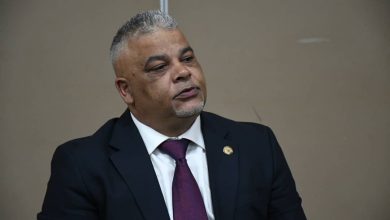
Malawi Stock Exchange (MSE)-listed NBS Bank plc board chairperson Vizenge Kumwenda has advised government to pursue a win-win domestic debt restructuring model that strikes a balance between commercial banks’ sustainability and easing fiscal pressure.
Speaking during the bank’s annual general meeting (AGM) in Blantyre on Wednesday, he said although domestic debt restructuring is not unusual, fiscal authorities should avoid approaches that result in banks incurring losses through write-downs.
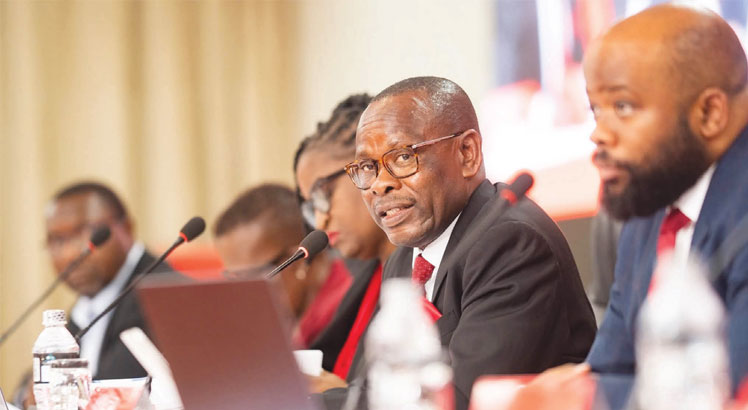
Kumwenda, who is also MSE-listed financial services conglomerate Nico Holdings plc managing director, warned that if banks incur losses, confidence in lending to government would decline, Malawi’s sovereign creditworthiness would weaken while the cost of borrowing for government, banks and companies on international markets would rise.
He said: “There are various ways of doing restructuring. Indeed, some approaches can result in banks and the lenders losing money where they incur write-downs.
“There are also ways of achieving a win-win situation where banks appreciate the need of government to restructure, but then also the government appreciates that it is not in the interest of the financial markets for the banks to incur losses.”
However, Kumwenda told the bank’s shareholders that government was yet to come up with a final position on how debt restructuring will be implemented, adding that “until the matters are concluded, we really don’t know exactly how things are going to turn out”.
He said NBS Bank has accounted for its government debt exposure in line with International Financial Reporting Standards.
Published NBS Bank plc data show that as at December 2025, the bank had K723.4 billion in government securities, a rise from the previous year’s K510.8 billion.
His remarks on debt restructuing come as government is pursuing domestic debt reprofiling to ease mounting interest costs, with public debt standing at K23.9 trillion, equivalent to 90.9 percent of the country’s gross domestic product, as of December 2025. Out this amount, K16 trillion or 65 percent is domestic debt.
Interest payments on the debt are projected to rise to K2.7 trillion in the 2026/27 financial year from K2.2 trillion in the previous fiscal year.
Minister of Finance, Economic Planning and Decentralisation Joseph Mwanamvekha in on record as having indicated that the discussions are being conducted on a case-by-case basis because banks, pension funds and insurance firms have different levels of exposure.
“We are doing it in a manner that we do not want to disrupt the banking sector or any investor. Otherwise, if you mismanage that situation, I will guarantee you that people will not want to invest,” he said.
Economics Association of Malawi president Bertha Bangara Chikadza said that in an interview that domestic creditors are deeply intertwined with the financial system, meaning that any changes to repayment terms can affect banks’ balance sheets, pension fund returns and the savings of ordinary Malawians.
In April this year, the World Bank said Malawi’s debt restructuring had stalled following the collapse of the four year $175 million (about K306 billion) International Monetary Fund (IMF) Extended Credit Facility programme, describing the country as one of the region’s most challenging debt cases.
The World Bankhad warned in its Malawi Economic Monitor, that domestic debt is on a “precarious trajectory” and urged a structured domestic debt reprofiling programme with transparent, rules-based terms, cautioning that failure to act could trigger a disorderly domestic default with implications for financial stability, credit provision and economic growth.
According to the IMF, about a third of Malawi’s domestic debt is held by commercial banks, pension and insurance funds and the Reserve Bank of Malawi, making any restructuring highly sensitive.
The fund warned that delaying domestic debt reforms often results in deeper crises.